- Home
- Events
- Investigations
- News
- OPINION
- Police/Fire/EMS
- Politics
- Sports & Schools
Suffolk’s Water Quality Problems
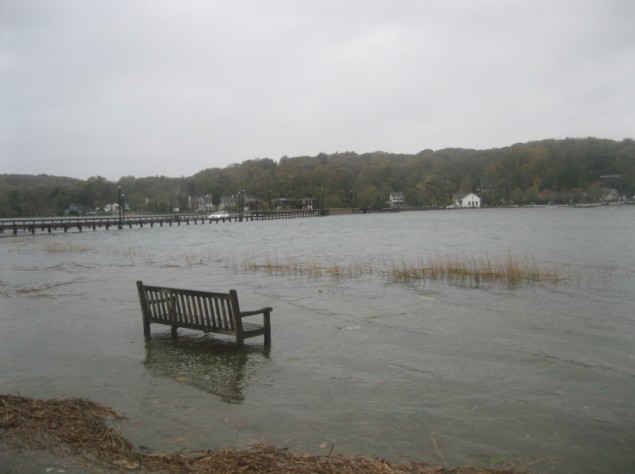
Suffolk County recently released the thousand page report called the Comprehensive Water Resources management Plan. The report states, “Suffolk County’s water quality is at a tipping point. We face an alarming trend in the quality of the water our families drink, compounded by impairment of many bodies of water in which our families play. The report stresses that the main culprits are residential septics and cesspools, as well as fertilizer.
Several years ago environmental expert Dan Gulizio spoke at a meeting of the Greater Huntington Civic Group and alerted residents that we need to be concerned about our water quality. He discussed the Comprehansive Water Resources management plan which was in the draft stages at the time of Gulizio’s presentation in 2013. At the time of this meeting Glizio discussed over development, density and poor planning as the main culprits of Suffolk’s water and air quality problems.
“In terms of air quality, there are 62 counties in NY State. Suffolk county has the worst ozone pollution out of all the 62 counties, stated Mr. Gulizio. He continued, “according to reports from the American Lung Association, for 13 years in a row, Suffolk County has received a grade of F based on its ozone pollution in a study conducted by the Lung Association.
Gulizio explained, “there are a variety of reasons for this. One of the main reasons is the number of people living here. There are 1.5 million people living in Suffolk County and another 1.5 people living in Nassau County. This causes a great deal of pollution especially from the number of cars.”
“The Northport power plant has been evaluated as the 2nd most polluting power plant in the northeast. The Port Jefferson plant has been identified as one of the 21 dirtiest plants in New York State. Both of those plants don’t meet clean air standards that are required today. Mr. Gulizio explained that “when they were built, they were deemed to be temporary plants to be used for a brief period of time. They were supposed be taken off line but never happened.”
Water Quality
“We get all of our water from the aquifers below our feet,” stated Mr. Gulizio. “Whatever we put into the ground finds its way into our drinking water and into our streams, lakes and bays. The ground water supplies 70% of the flow for our surface water.”
“One of the biggest health contaminants that the department of health screens for is Nitrogen,” said Mr. Gulizio.
“Nitrogen comes from our waste, fertilizers as well as from the atmosphere,” said Gulizio. He continued, “the overwhelming majority of it comes from our septic systems and our sewage treatment plants.”
“The health department has established standards for articles 6 and 7 under the sanitary code to protect us from too much nitrogen going into our ground water. If we have more than 10 milligrams per liter of nitrogen we get sick.” The standard to keep the rivers, bays and estuaries is much more stringent then the ones that are supposed to keep us healthy. “Instead of no more than 10 milligrams per liter to keep us healthy, it is 1 milligram per liter to keep them healthy,” said Gulizio.
“According to the Comprehensive Water Resources Management Plan study, Nitrogen has increased in the Upper Glacial aquifer by 38%. In the next layer or Magothy Aquifer, it has increased by 200%,” said Gulizio.
He continued, “despite what we hear from the development community about too many restrictions, too much red tape, these findings may suggest otherwise.”
Gulizio explained that over-development has not only hurt our drinking water, it has adversely impacted our bays and streams. “In 1976, approximately 700,000 bushels of clams were harvested from the Great South Bay. In 2009, the number was 7000 bushels. There has been a 99% decline in the clam population in the Great South Bay,” he said.
“In the 1970’s and 80’s the scallop population in the Peconic Estuary was one of the most naturally bountiful harvests in the county. Harvesters would typically remove between 400,000 and 500,000 pounds of scallops annually from the Peconic Estuary. It is now about 20,000 pounds,” said Gulizio.
“Studies show that the nitrogen that is impacting the clam and scallop population is coming from human waste,” explained Gulizio.
“In addition to the significant impact on the clam and scallop population, the lobster harvest has also been significantly impacted,” he said.
“The Long Island sound used to have one of the most bountiful lobster harvests. In 1998, there was 3.7 million pounds of lobsters removed from the Long Island Sound annually. In 2011, there was 124,000 pounds of lobster harvested which is a 98% decline,” explained Gulizio.
“Water Quality experts will say as long as nitrogen is below 10 milligrams per liter or as long as the volatile organic compounds related to petroleum below the surface level stay below a certain level, and as long as certain pharmaceuticals are below a certain level, it’s ok. When asked the question what about a cocktail chemical sitting in our groundwater, what about that, did anybody study that? The answer is no. They can’t tell you what happens when you combine all of these elements,” stated Gulizio.
“The Comprehensive Water Resources Management Plan Study detected more than 80 pesticide related compounds in our drinking water,” he added.
“We have more than 10,000 acres of shellfish beds that are closed on an annual basis because of toxins,” said Gulizio.
He explained there are diseases that not only hurt the shellfish, they hurt us. “We have diseases that give us intestinal problems. In Southampton and Huntington we have experienced what is called Paralytic Shellfish Disease, that not only kills the shellfish, but it is potentially fatal to humans who ingest shellfish that are contaminated with it.”
He questioned, “when did it become acceptable for us as a community to say that my kids can’t swim in our coastal waters today because it rained yesterday?”
“When it rains, it washes all of those toxins and pollutants into our waters and we can get sick if we swim,” he explained.
Gulizio continued, “Government’s answer is to say “We’ll just put a sign up and a note on the county website and we’ll say you can’t swim and then everything will be ok.”
He continued, “What’s next? Don’t go outside today because the ozone pollution is so bad? Well that’s starting to happen too. We get ozone advisory days where the elderly and sick are advised not to go outside. This is unacceptable and it doesn’t happen by accident. The reason this is happening is because we have poor regulation, poor planning and our development patterns are starting to come home to roost right now,” said Gulizio.

Sewage Treatment Plants
“There are 199 sewage treatment plants (constructed or under construction) in Suffolk county,” said Gulizio. He continued, “one thing everyone is talking about is that we need more sewage treatment plants to protect our water.”
“The Comprehensive Water Resources Management Study looked at the sewage treatment plants that were operating between 2003 – 2006. There were about 154 operating at that time. During that time period, 79% of those treatment plants failed to meet drinking water standards,” stated Gulizio.
Gulizio added, “you will hear that sewage treatment plants will improve the nitrogen situation.” If you look at one house tied to a sewage treatment plant compared to one house tied to a septic tank, more nitrogen will be removed from the house tied to the treatment plant. But it is deceiving, explained Gulizio “because in Suffolk County, sewage treatment plants are tied to dramatic increases in density development. So when you load 14 + units per acre on a parcel, you are loading more nitrogen into the water coming from a development connected to the sewage treatment plant than you would from a single family home.”
You have to ask the right questions; “Does a treatment plant remove more nitrogen? Yes. Does it remove nitrogen when you are having a dramatic increase in density? Absolutely not.”
“If you build in hubs and then preserve open space on another parcel then you are preventing sprawl.” According to Mr. Gulizio, of the 199 treatment plants, not one prevented sprawl and all led to higher density.
The Farce of the TOD
Transit Oriented Development is the concept of concentrating the development around the train station in order to reduce the amount of traffic of the increased development. Gulizio explained, “If you are increasing density you are not going to reduce traffic.” He added, “a single family home generates about 10 trips (car trips) per day. A high density unit in a TOD, yields about 6 trips per day. If you are increasing the density from 2 units per acre to 14 units per acre, you are not reducing the number of trips, in fact you are dramatically increasing the number of trips.”
Gulizio said that he asked the smart growth people to show him one place in the country that reduced traffic after increasing density. They could not come up with a single study to support this concept. “If it is not decreasing traffic, and it is in fact increasing traffic, it is increasing your air pollution.”
You will hear people say, we need more multi-family housing because young people are leaving. They will say that multi-family housing generates fewer school aged children than single family homes. They will say that multi-family units are tax positive.
“If you compare one single family home to one unit of high density housing there will be more children in the single family home. In a study done by the Long Island Regional Housing Partnership it states in a single family home the number is .58 children per household.” stated Gulizio. “For a typical multi-family housing unit the expected number is .18 per unit. The problem is,” he continued “when we build multi-family housing, we don’t build it at the same density that we build a single family home.
“Once you get past the density of about 3.5 units per acre, you are generating more school aged children than a single family dwelling,” explained Gulizio.
“This is a trend and it continues. If you look at population density over time in Suffolk county, it has not only increased but it is also moving East. This is causing the Island to become more and more dense,” said Gulizio.
Gulizio continued, what has happened over the years after decades of influence of special interest and a lack of participation from the public is that the balance has gotten out of whack. We don’t have the right balance in many communities between residential, commercial and industrial. We don’t have the right jobs being generated. We have a surplus of shopping center development. We are seeing the number of abandoned shopping centers going up. We are also hurting our downtowns by building shopping centers outside of our downtowns, he explained.
How did we get here and can we recover?
Many people feel we have reached the point of no return in terms of Over Development and destroying Long Island’s natural resources. Mr. Gulizio is not one of them. He is still optimistic that we can reverse what has been going on.
According to Gulizio, “there are not enough people paying attention and participating in the process.” He explained that while regular people are not paying attention, special interest groups have been taking advantage. “They have more time and money to participate.”
Gulizio continued, “We can see the influence of the special interest in a variety of ways including the appointment of the boards that regulate land use. There is not one public school advocate on the town boards that deal with zoning and development. It is all business people.”
Another problem he explained, “You can’t have a rational process without all the pertinent information. The people on these boards don’t have good, impartial information.”
He urges resident to show up at meetings, and make calls to elected officials. He continued, “It can’t be the same faces of people that show up at every meeting. The key is to get a small percentage of the population to show up. We need to get 2% of the population to go to 2 meetings per year.” He believes that would be enough to make an impact.
“We need to motivate people and make them realize there are some common ground issues that we need to focus on. Such as clean air, clean water and equal protection.”
He continued, “it is not that one density is good and one is bad, it’s that you should know what issues and costs are associated with a particular development.”
A big quality of life issue that has been created in the Town of Huntington is that the town has violated its own rules. Gulizio said, “If the town had obeyed it’s own rules, it wouldn’t have to consider zoning changes or face lawsuits.” He continued, “every project sets a precedent.”
He explained the best way to clean ourselves of this is by having town officials start doing what they said they would do according to their Horizons 2020 plan.
“The town needs to adopt rational standards for the distribution and density of housing in order to protect our water quality and quality of life.” Gulizio continued, “when you do that, then you have a rational basis for your actions providing you act according to your plans. When you don’t do that, you leave the town and all the residents vulnerable to lawsuits and at the whim of the builders. Which is what has been going on in Huntington.

Facebook Comments must be signed into Facebook




.png)

You must be logged in to post a comment Login